FR-4 CCL Structure Explained: Fiberglass, Epoxy Resin and Copper Foil
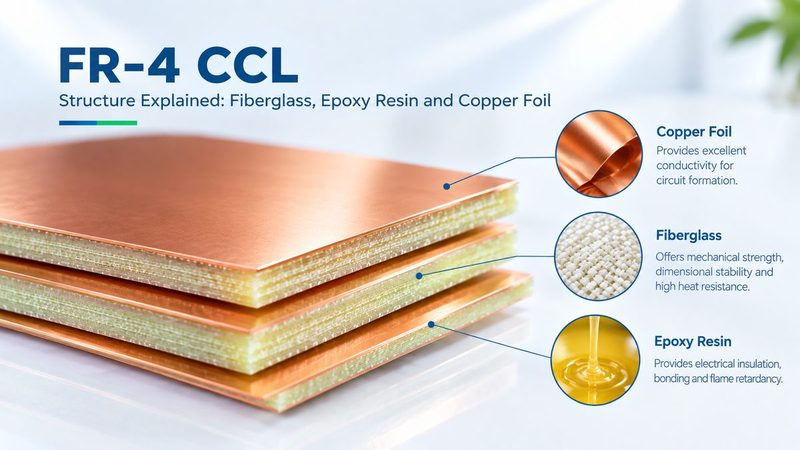
FR-4 Copper Clad Laminate (FR-4 CCL) is one of the most widely used substrate materials for rigid printed circuit boards (PCBs). Its performance comes from the combination of three key components: fiberglass reinforcement, epoxy resin, and copper foil.
Understanding the structure of FR-4 CCL helps PCB designers, engineers, manufacturers, and purchasing teams choose the right laminate for their applications.
In this guide, we explain the FR-4 CCL structure, the function of fiberglass, epoxy resin, and copper foil, how these materials work together, and which specifications should be considered when purchasing FR-4 copper clad laminate.
What Is FR-4 CCL?
FR-4 CCL stands for FR-4 Copper Clad Laminate.
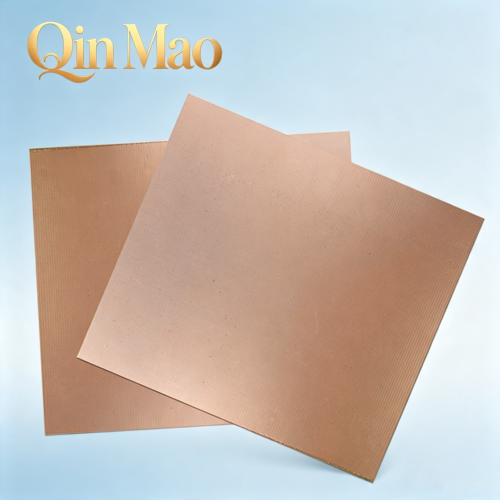
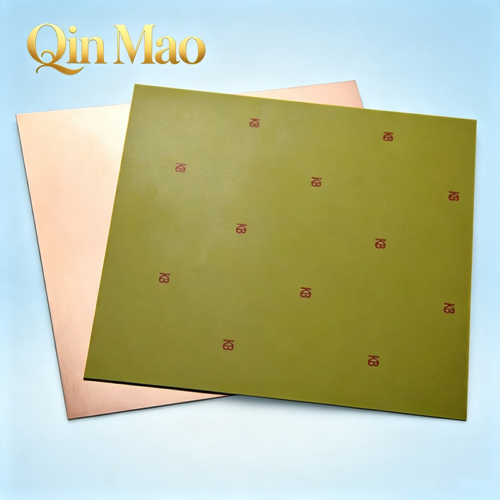
It is a composite laminate consisting primarily of woven glass fabric impregnated with epoxy resin, with copper foil laminated to one or both sides.
A simplified structure is:
Copper Foil → Fiberglass + Epoxy Resin → Copper Foil
For a single-sided copper clad laminate, the structure can be:
Copper Foil → FR-4 Insulating Substrate
For double-sided FR-4 CCL:
Copper Foil → FR-4 Core → Copper Foil
The actual internal construction can vary depending on the required laminate thickness, glass-cloth style, resin content, copper thickness, and material specification. IPC technical material describes FR-4 laminate composition in terms of copper foil, glass fibers/woven glass fabrics, and resin.
The Three Main Components of FR-4 CCL
The performance of FR-4 CCL depends on how its main materials work together.
The three key components are:
- Fiberglass
- Epoxy Resin
- Copper Foil
Each component has a different role in the final copper clad laminate.
1. Fiberglass: The Reinforcement Layer
Fiberglass provides the structural reinforcement of FR-4 CCL.
In conventional FR-4 materials, glass fibers are woven into glass fabric and incorporated into the resin system. Different glass-cloth constructions can be used to achieve different laminate thicknesses and performance characteristics. IPC documentation shows FR-4 constructions using different glass-weave styles and resin contents.
What Does Fiberglass Do?
Fiberglass primarily contributes to:
- Mechanical strength
- Dimensional stability
- Structural rigidity
- Resistance to deformation
- Support for the resin system
Without reinforcement, the epoxy resin alone would not provide the same level of mechanical stability required for rigid PCB substrates.
The glass reinforcement helps the laminate maintain its dimensions during PCB manufacturing and operation.
Why Is Glass Cloth Important?
Different glass-cloth styles can influence the final laminate thickness, resin content, dielectric characteristics, and mechanical properties.
For PCB manufacturers, this means that FR-4 is not simply one fixed material construction.
Two FR-4 laminates may have the same nominal thickness but use different internal glass constructions and resin systems.
2. Epoxy Resin: The Insulating and Bonding Material
Epoxy resin is another essential component of FR-4 CCL.
The resin impregnates the fiberglass fabric and bonds the glass reinforcement together during the lamination process.
The resin system also provides electrical insulation between conductive copper layers.
What Does Epoxy Resin Do?
Epoxy resin contributes to:
- Electrical insulation
- Bonding between glass-fiber layers
- Structural integrity
- Moisture and environmental resistance
- Thermal performance
- Flame-retardant characteristics in appropriately formulated materials
The exact performance depends on the specific resin formulation.
Therefore, it is important not to assume that every FR-4 laminate has identical thermal, electrical, or flammability characteristics.
Resin Content Matters
The amount of resin in the laminate is an important factor in PCB material design.
For example, different glass-cloth constructions and resin contents can be combined to achieve different laminate thicknesses and properties. IPC technical documentation provides examples of FR-4 constructions using different glass-weave styles and resin contents.
This is particularly important when designing multilayer PCBs, where the resin system also plays a role in bonding different layers together.
3. Copper Foil: The Conductive Layer
Copper foil is the conductive component of FR-4 CCL.
It is laminated onto one or both sides of the FR-4 insulating substrate.
During PCB manufacturing, the copper foil is processed through imaging and etching or other circuit-forming processes to create:
- Conductive traces
- Pads
- Copper planes
- Ground layers
- Power layers
Why Is Copper Used?
Copper has excellent electrical conductivity and is widely used for PCB circuit formation.
The copper thickness selected for an FR-4 CCL depends on the PCB design, current requirements, manufacturing process, and customer specification.
Common copper thicknesses include:
- 18 μm
- 35 μm
- 70 μm
Other copper thicknesses can also be available depending on the laminate manufacturer and application.
When requesting a quotation, buyers should specify the required copper thickness rather than simply asking for “FR-4 CCL.”
How Do Fiberglass, Epoxy Resin and Copper Foil Work Together?
The three components perform different functions:
| Component | Main Function |
|---|---|
| Fiberglass | Mechanical reinforcement and dimensional stability |
| Epoxy Resin | Insulation, bonding and structural support |
| Copper Foil | Electrical conductivity and circuit formation |
Together, these materials create a substrate that combines mechanical strength, electrical insulation, and conductive capability.
This combination is one of the main reasons FR-4 CCL is widely used for rigid PCB manufacturing.
FR-4 CCL Layer Structure
A simplified double-sided FR-4 CCL can be illustrated as:
Copper Foil
↓
Fiberglass + Epoxy Resin
↓
Fiberglass + Epoxy Resin
↓
Copper Foil
However, actual FR-4 laminate construction can contain multiple glass-fabric layers.
For example, different glass-weave styles may be combined to achieve a particular dielectric thickness or mechanical requirement. IPC examples include constructions using glass styles such as 1080, 2116, and 7628.
Therefore, the visible edge of an FR-4 laminate may show multiple layers of glass reinforcement embedded within the cured resin.
How Is FR-4 CCL Manufactured?
The production of FR-4 CCL involves several important stages.
Step 1: Glass Fabric Preparation
Woven fiberglass fabric is prepared according to the required construction.
The selected glass-cloth style affects the final laminate structure.
Step 2: Resin Impregnation
The glass fabric is impregnated with epoxy resin.
The resin partially cures and forms prepreg, which can later be laminated.
Step 3: Layer Stacking
The required glass-fabric and resin layers are stacked according to the target thickness and material construction.
Step 4: Lamination
The stacked materials are subjected to controlled temperature and pressure.
The epoxy resin flows and cures, bonding the glass-fiber layers together.
Step 5: Copper Foil Lamination
Copper foil is bonded to one or both sides of the insulating substrate.
The result is a copper clad laminate suitable for PCB fabrication.
Step 6: Inspection
Finished FR-4 CCL can be inspected for parameters such as:
- Thickness
- Copper thickness
- Surface quality
- Dimensional characteristics
- Electrical properties
- Thermal characteristics
- Flammability requirements
- Other customer specifications
What Is Prepreg and How Is It Related to FR-4 CCL?
Prepreg is an important material in FR-4 PCB manufacturing.
It consists of glass fabric impregnated with partially cured resin.
IPC describes resin stages as:
- A-stage: liquid resin
- B-stage: partially cured resin
- C-stage: fully cured resin
During PCB lamination, B-stage resin can flow and cure to bond layers together.
This makes prepreg particularly important in multilayer PCB manufacturing.
A simplified relationship is:
Glass Fabric + Partially Cured Resin → Prepreg
and during lamination:
Prepreg + Heat + Pressure → Cured FR-4 Insulating Layer
What Determines the Thickness of FR-4 CCL?
FR-4 CCL thickness is not determined by the copper foil alone.
The overall laminate thickness depends on factors including:
- Glass-cloth construction
- Number of glass-fabric layers
- Resin content
- Lamination conditions
- Copper foil thickness
For this reason, when purchasing FR-4 CCL, it is important to specify the finished laminate thickness and copper thickness separately.
For example:
FR-4 CCL / 1.6 mm / 35 μm Copper / Double-sided
This gives the supplier much more useful information than simply saying:
“FR-4 board.”
Common FR-4 CCL Specifications
When purchasing FR-4 copper clad laminate, buyers may need to provide the following information:
| Specification | Example |
|---|---|
| Material | FR-4 |
| Laminate Thickness | 1.6 mm |
| Copper Thickness | 35 μm |
| Copper Side | Double-sided |
| Panel Size | 1000 × 1200 mm |
| Quantity | 500 sheets |
| Tg Requirement | According to application |
| Flammability Requirement | According to required certification |
| Special Requirement | RoHS / electrical / thermal requirements |
The actual specification should always be confirmed according to the PCB design and application.
Single-Sided vs. Double-Sided FR-4 CCL
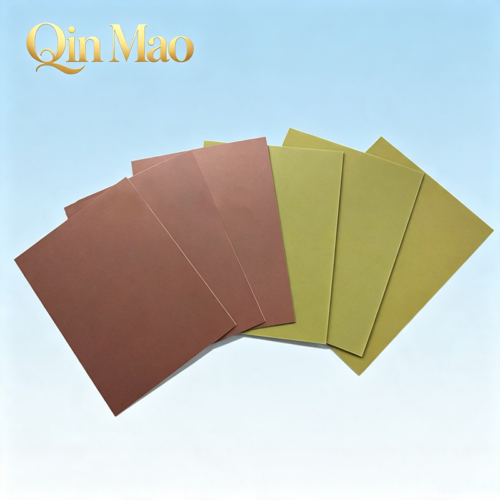
FR-4 CCL can be supplied with copper on one or both sides.
Single-Sided FR-4 CCL
Structure:
Copper Foil → FR-4 Insulating Layer
It is used for PCB designs where conductive copper is required on one side.
Double-Sided FR-4 CCL
Structure:
Copper Foil → FR-4 Insulating Layer → Copper Foil
Double-sided CCL provides conductive copper layers on both sides and is widely used for more complex PCB designs.
What Are the Advantages of FR-4 CCL?
The combination of fiberglass, epoxy resin, and copper foil gives FR-4 CCL a useful balance of properties.
Mechanical Strength
Fiberglass reinforcement provides structural support and dimensional stability.
Electrical Insulation
The cured epoxy/glass substrate electrically separates conductive copper layers.
Circuit Conductivity
Copper foil provides the conductive layer required to form PCB circuits.
Manufacturing Compatibility
FR-4 materials are compatible with many conventional PCB fabrication processes.
Wide Range of Specifications
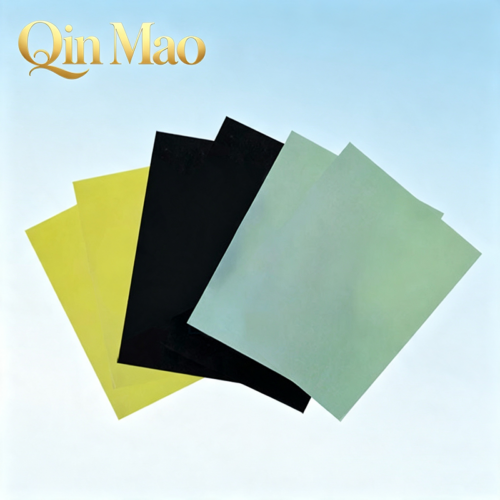
FR-4 CCL is available in different laminate thicknesses, copper thicknesses, glass constructions, and material grades.
Where Is FR-4 CCL Used?
FR-4 CCL is commonly used as the base material for rigid PCBs in applications such as:
- Consumer electronics
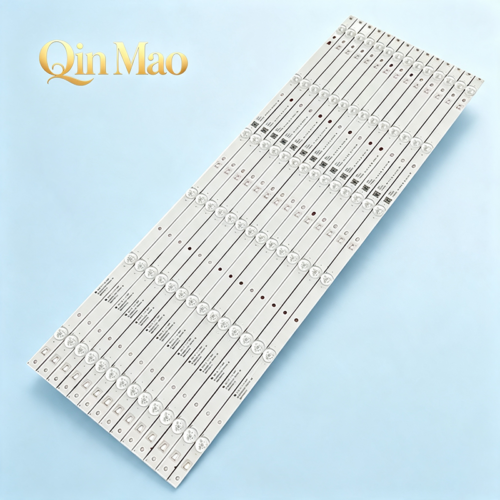
- LED products
- Computers
- Industrial control equipment
- Communication equipment
- Electrical appliances
- Power electronics
- Automotive electronics
- General electronic equipment
The appropriate FR-4 grade should be selected according to the electrical, thermal, mechanical, and manufacturing requirements of the specific application.
How to Choose the Right FR-4 CCL?
When purchasing FR-4 CCL, consider the following factors.
1. Laminate Thickness
Choose the required finished dielectric thickness according to the PCB design.
2. Copper Thickness
Select the appropriate copper thickness based on current requirements, circuit design, and PCB manufacturing specifications.
3. Single-Sided or Double-Sided
Confirm whether copper is required on one or both sides.
4. Thermal Requirements
For applications involving higher operating temperatures or demanding soldering processes, check the specific material’s thermal properties.
5. Electrical Requirements
For standard PCB applications, conventional FR-4 may be suitable.
For high-speed or high-frequency designs, dielectric constant, dissipation factor, glass style, and other electrical characteristics should be evaluated carefully.
6. Tg and Material Grade
If the application requires higher thermal performance, a specific high-Tg FR-4 material may be appropriate.
Do not select a material solely based on the general “FR-4” designation. Always confirm the manufacturer’s technical datasheet.
FR-4 CCL vs. Aluminum CCL
FR-4 CCL and aluminum CCL are designed for different application requirements.
| Feature | FR-4 CCL | Aluminum CCL |
|---|---|---|
| Main Reinforcement | Fiberglass | Aluminum metal base |
| Insulation | Epoxy/glass | Dielectric insulation layer |
| Mechanical Structure | Rigid laminate | Metal-based structure |
| Thermal Management | Conventional | Generally better heat dissipation |
| Common Applications | General PCB applications | LED and thermal management applications |
For applications where heat dissipation is a major concern, aluminum-based PCB materials may be considered instead of standard FR-4.
What Information Should You Send to an FR-4 CCL Supplier?
To receive an accurate quotation, it is helpful to provide:
1. Material: FR-4
2. Laminate thickness: ___ mm
3. Copper thickness: ___ μm
4. Copper side: Single-sided / Double-sided
5. Panel size: ___ mm × ___ mm
6. Quantity: ___ sheets
7. Required grade: Standard FR-4 / High-Tg FR-4 / Other
8. Special requirements: ___
For example:
FR-4 CCL, 1.6 mm thickness, 35 μm copper, double-sided, 1000 × 1200 mm, 500 sheets.
Providing complete specifications allows the supplier to check material availability and prepare a more accurate quotation.
Frequently Asked Questions About FR-4 CCL Structure
What are the main materials in FR-4 CCL?
The main components are glass fiber/fabric, epoxy resin, and copper foil. The glass reinforcement and resin form the insulating substrate, while copper foil provides the conductive layer.
Is FR-4 made only from fiberglass and epoxy resin?
The insulating substrate is primarily a glass-reinforced epoxy system, but a finished FR-4 CCL also includes copper foil on one or both sides.
What is the function of fiberglass in FR-4?
Fiberglass provides mechanical reinforcement and contributes to dimensional stability and structural strength.
What is the function of epoxy resin?
Epoxy resin bonds the glass reinforcement together and provides electrical insulation and other properties determined by the specific resin formulation.
What is the function of copper foil?
Copper foil provides the conductive layer used to create circuit traces, pads, planes, and other conductive features during PCB manufacturing.
Does every FR-4 CCL have the same structure?
No. FR-4 CCL can use different glass-cloth constructions, resin contents, copper thicknesses, and material formulations. Therefore, actual specifications should be confirmed from the manufacturer’s datasheet.
Conclusion
The structure of FR-4 Copper Clad Laminate is based on the complementary functions of three key materials: fiberglass, epoxy resin, and copper foil.
Fiberglass provides reinforcement and dimensional stability, epoxy resin bonds the structure and provides electrical insulation, while copper foil provides the conductive layer required for PCB circuit formation.
Understanding these three components makes it easier to evaluate FR-4 CCL specifications and select the appropriate material for PCB manufacturing.
When purchasing FR-4 CCL, it is important to specify not only the material type, but also laminate thickness, copper thickness, copper side, panel size, quantity, Tg, and any special electrical or thermal requirements.
Looking for FR-4 CCL for Your PCB Production?
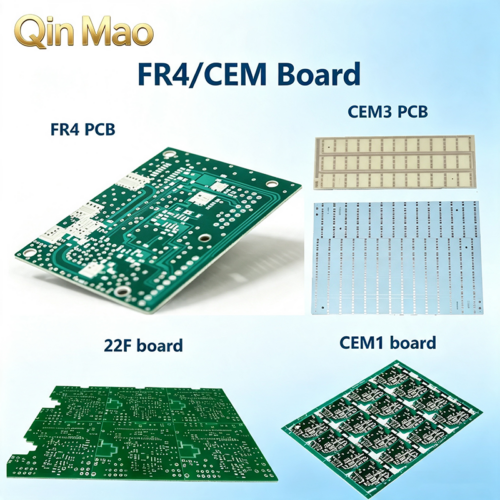
Shenzhen Qinmao Technology Co., Ltd. supplies FR-4 CCL, Aluminum CCL, CEM-3 CCL and corresponding PCB boards.
Send us your required material, thickness, copper thickness, panel size and quantity, and we can check the specifications and prepare a quotation for your reference.
Contact: Lucy
Email: [email protected]
Website: www.longxingccl.com